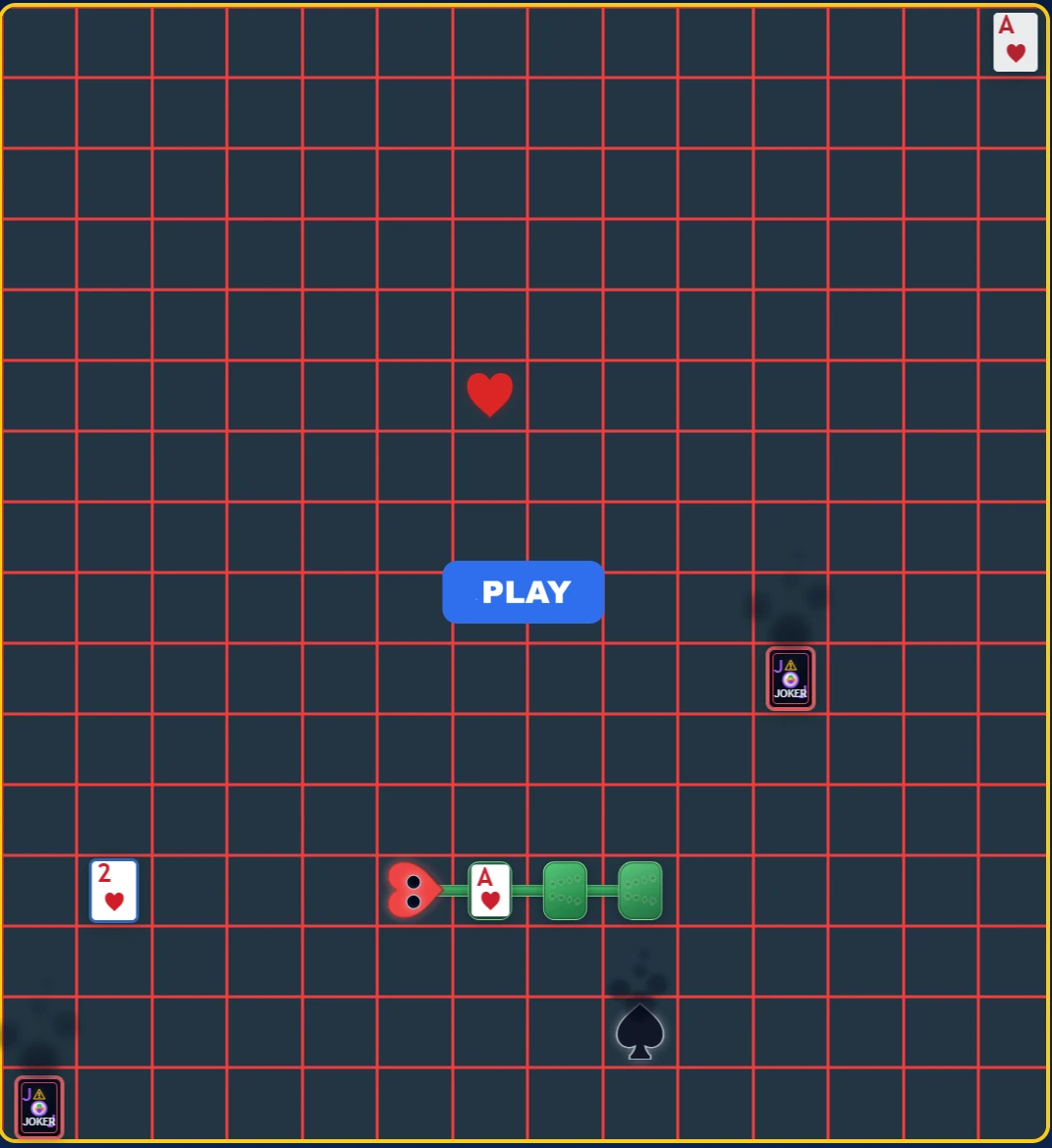
Snake 13 combines the pressure of a classic snake game with the structure of card progression. Instead of moving only to survive, you also need to follow the correct sequence and keep making decisions that support future moves. That makes every route choice matter. A short path may look safe at first, but it can become a dead end if it blocks the next required card. As the pace increases, the game asks for more than quick reactions. Planning ahead becomes just as important as precise movement, because the best players think about where the snake body will be several steps later, not only where it is right now.
The main objective in Snake 13 is simple to understand but hard to master. You need to collect cards in the correct order, move from Ace all the way to King, and survive long enough to keep building progress. At the same time, you must avoid collisions, avoid bad turns, and keep enough open space to reach future cards without trapping yourself. The game rewards players who balance short-term survival with long-term route planning.
The core movement loop in Snake 13 is built around small, repeated decisions. You move, read the board, and prepare the next turn before the board forces you into danger. Good players do not wait until the last moment to react. They plan curves early, keep the snake body from blocking future lanes, and preserve enough room to adapt when the game speeds up.
You cannot collect any card and expect progress. Snake 13 only counts the next correct card in the sequence, so the game pushes you to think one step ahead at all times. If you ignore where future required cards might appear, you can create awkward routes that are hard to recover from. Reading the board early helps you stay efficient, because the best path is usually the one that keeps both the current move and the next move safe.
The A to K structure also changes how you value space. A card that looks close is not always the best target if it leads you into a crowded area or cuts off the route you will need next.
Chasing the closest card without planning. New players often rush toward the nearest visible card because it feels efficient. In Snake 13, that can backfire if the path becomes too tight or if the move leaves no good follow-up route.
Trapping the snake body. Another common mistake is turning in a way that limits your own movement. Once the body blocks key lanes, a safe recovery becomes much harder, especially when speed increases.
Ignoring future card positions. Snake 13 is not only about the current pickup. Players who fail to think ahead often end up with a strong early run that collapses when the next required card appears in an awkward place.
Playing too aggressively when speed increases. Speed pressure makes reckless movement more dangerous. Strong beginners usually slow their thinking down, even when the game itself is getting faster.
A simple practice routine works best for new players. Start by focusing on survival first, because staying alive gives you more chances to learn the board. After that, focus on collecting the sequence correctly, so you build reliable progress instead of random movement. Once the route decisions feel more natural, begin improving your speed and response timing. After that, shift attention to scoring and efficiency so each run becomes more productive.
Snake 13 feels different because it blends two kinds of challenge at once. It has the reflex pressure of a snake game and the planning pressure of a puzzle game. That combination forces constant awareness of both movement and card progress. Every run also creates new board states, so no two games feel exactly the same. You are always reading space, route options, and sequence goals together.
You move the snake through the board, collect the next correct card in sequence, and avoid crashes while the pace increases.
The goal is to survive, collect cards from Ace to King, and keep your route open long enough to complete progress.
Yes. Only the next correct card counts, so sequence order is part of the challenge.
It can be challenging at first, but the core rules are easy to learn and the game becomes more manageable with practice.
Play slowly at first, prioritize survival, and start planning future turns before the current move is finished.
Read the rules for collision and penalty details.
Improve consistency with the complete guide and strategy tips.
Continue with why this puzzle is fun, Snake 13 Online, Play Snake 13 Online, Snake 13 Game, Snake 13 Browser Game, and Play Snake 13 Free.
Start a run now and use these beginner ideas in a real game. The fastest way to improve is to play, read the board, and adjust your route one move at a time.
Play Snake 13