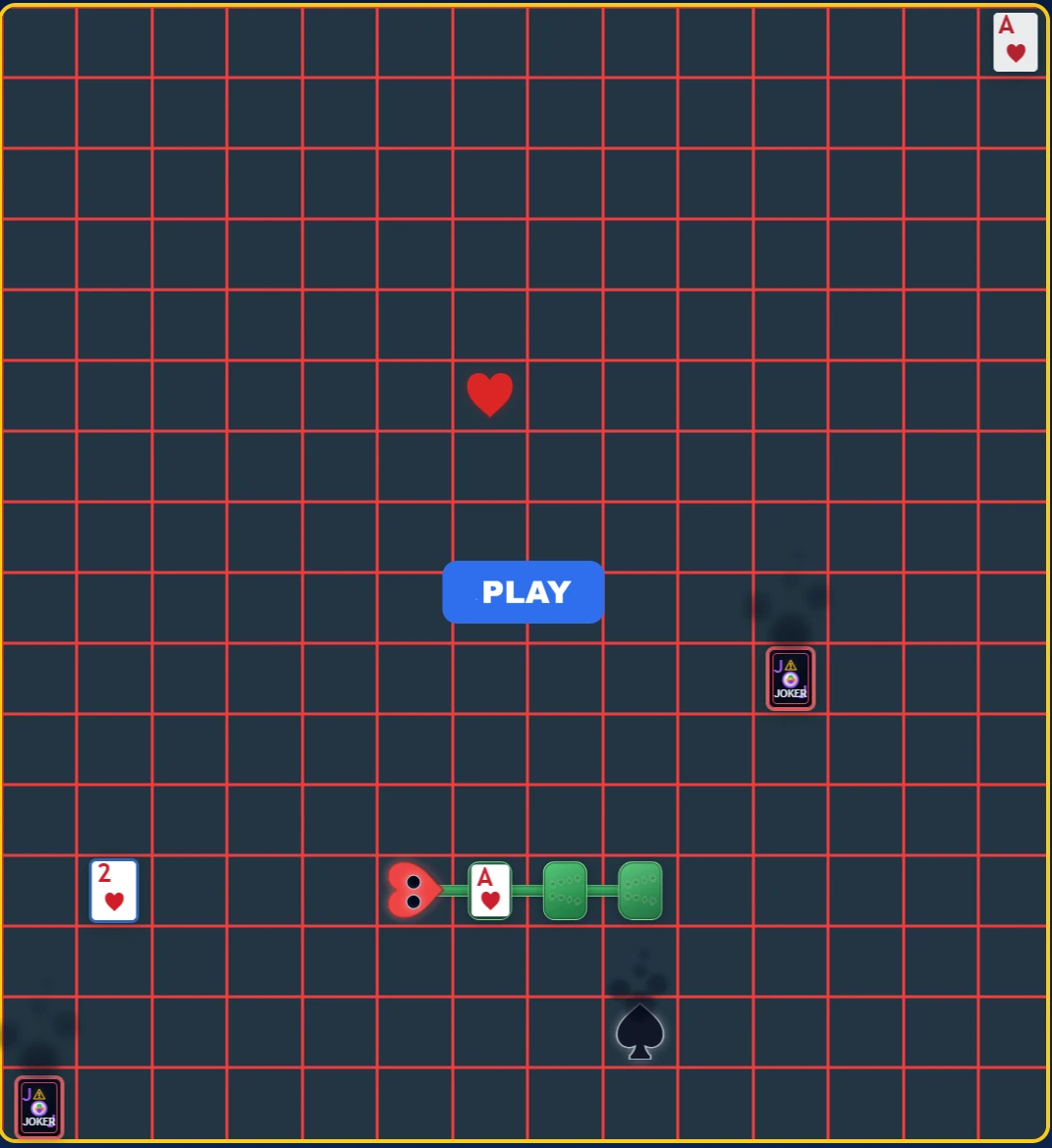
Snake 13 does not depend only on reflexes. Good strategy comes from route quality, sequence awareness, and survival discipline. Aggressive cuts can look fast in the moment, but they often create traps that are hard to escape later. Strong players stay patient, protect lives, and keep their progress stable even when the board starts moving faster. The goal is not to take every risky shortcut. The goal is to stay in control long enough to finish the sequence cleanly. When you understand how routes, ranks, and hazards interact, each run becomes easier to manage and much more consistent.
Strong Snake 13 strategy is built on a few core principles. Route quality matters because every turn changes the board. Sequence awareness matters because the A-to-K order controls what you should pursue next. Safe turns protect you from self-traps. Life preservation keeps long runs alive. Black joker control reduces sudden danger. Consistency under speed pressure is what ties everything together when the game becomes harder.
Planning turns early gives you more control over the route. Before entering a narrow corridor, read the next required rank and think about how the body will move after the pickup. Wider curves are usually safer because they reduce the chance of running into a dead end. It is also important to avoid routes that do not have a clear exit. If you plan the way out before collecting the card, you reduce the chance of getting boxed in. Good route planning always includes a mental picture of where the snake body will be after the turn is complete.
Lives are a strategic resource in Snake 13, not just a fail state. If a route looks uncertain, treat it like a risk zone and slow down your decision-making. When the game speeds up, safe movement becomes more valuable than aggressive shortcuts. If you make an error, the best response is usually to reduce risk for the next few moves so the run can stabilize again. Preserving lives gives you more chances to recover sequence progress later.
The A-to-K sequence should guide every route choice. Picking the correct card safely is worth more than a greedy move that puts the run in danger. Bad decisions early in the game often create worse problems later, because a poor path can block the next required card or limit the space needed for recovery. Stable flow usually beats risky plays because consistency keeps the board manageable and makes future decisions easier.
Black jokers increase pressure and should be treated as direct threats to your route. If one appears near a tight area, avoid entering the area unless you already have a clear escape path. Keep space open around the danger whenever possible, because that extra room can save the run. When the risk is high, late turns become especially dangerous, so it is better to commit early and stay calm than to panic and cut too close.
Chasing the required card without checking exit routes. This makes the pickup look efficient, but it can leave no safe way out.
Cutting corners too aggressively. Sharp cuts save space only when they do not trap the body or block the next move.
Ignoring black joker pressure. Black jokers change the danger level of the board and should never be treated lightly.
Playing faster than recognition speed. Moving faster than you can read the board causes avoidable mistakes.
Repeating failed corner patterns. If a turn failed once, repeating the same structure often fails again.
Consistency improves when you review mistakes after each run and identify the patterns that cause collisions or bad turns. Once you see the pattern, it becomes easier to remove impulsive decisions and replace them with wider, safer routes. Survival should stay the priority before speed, because stable runs create more learning opportunities. Small corrections repeated over time are more useful than constantly changing strategy after every mistake.
The best strategy is to focus on route quality, sequence awareness, and survival rather than trying to force risky shortcuts.
Safe routes should come first. Speed matters later, but only after you can stay alive consistently.
Plan exits before turns, leave room for the body, and avoid narrow routes that remove your recovery options.
The sequence determines which card counts next, so it controls progress and shapes every route decision.
Treat black jokers as route threats, preserve escape space, and avoid late turns when their pressure is high.
Start with how to play and confirm all rules.
Read the complete guide and why this puzzle is fun.
Continue with Snake 13 Online, Play Snake 13 Online, Snake 13 Game, Snake 13 Browser Game, and Play Snake 13 Free.
Use these strategy tips in a real run and focus on safer choices from the first turn onward.
Play Snake 13