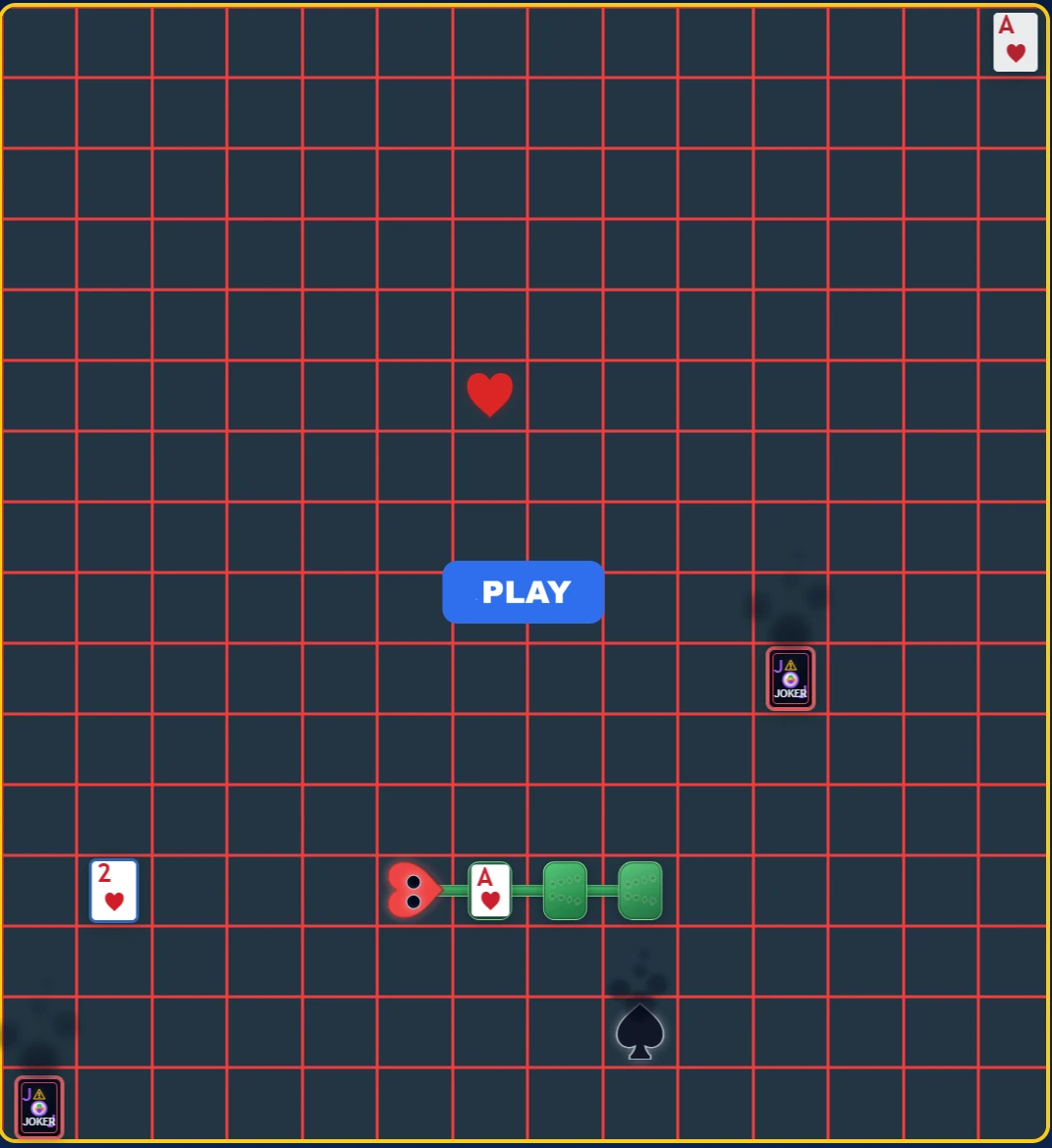
Snake 13 looks simple at first because the basic rules are easy to understand. You move the snake, collect the correct cards, and avoid collisions. The challenge comes from how those rules interact once the board starts moving faster and the available space gets tighter. A small mistake can snowball into a bad route, a trapped body, or a failed pickup. That is why knowing the rules matters so much. When you understand how sequence order, movement pressure, and hazard management work together, you can survive longer and make better decisions under stress.
The core rules are straightforward. You must follow the correct sequence, collect only the next needed card, keep your routes safe, and survive as long as possible. Everything else in the game flows from those four basics. If you break sequence order, take a bad route, or ignore available space, the run becomes much harder to recover.
The exact next card requirement is the foundation of Snake 13. Progress only happens when you collect the correct card in the current step, not just any visible card on the board. The A-to-K progression system gives the game its structure, and every turn should support that long-term goal. Route planning matters because the best path is the one that keeps future options open. Long-term board awareness helps you avoid committing to turns that create dead ends later.
Card progression happens only in the correct order. You cannot skip ahead, and you cannot treat the board like a free-choice card hunt. Each move you make changes the spaces you will have available later, so current decisions affect future cards in a very real way. Planning ahead reduces traps because you are not just aiming for the next pickup. You are also preparing for the pickup after that.
If the board looks crowded, the safest choice is usually the one that preserves options rather than the one that looks fastest in the moment.
Wall collisions and body collisions are the main failure points in Snake 13. Hitting a wall or running into your own body disrupts the run and can cost lives, which makes recovery harder on longer attempts. Those mistakes become more expensive when speed rises because you have less time to react and less room to correct a bad direction. The longer the run lasts, the more important it becomes to protect every remaining life.
Black jokers are dangerous because they create immediate pressure and can force a change in route timing. They are not just another board element to ignore. When one appears, your route has to account for both the hazard itself and the movement space around it. In many situations, it is better to prioritize evasion than to chase a card that would put you in a bad position. The key is to stay calm. Panic turns usually make the escape worse, while controlled movement keeps you alive longer.
Chasing visible cards too early. Players often go after the most obvious card before checking whether the route stays safe after the pickup.
Ignoring future path options. A move that looks fine now can create a dead end later if it closes off the board.
Turning too late. Late turning reduces control and can push the snake into walls or into its own body.
Focusing only on speed. Moving fast without planning usually leads to more mistakes than progress.
Underestimating black jokers. These hazards can force bad decisions if you do not respect their pressure immediately.
Consistent players usually know the rules deeply and use that knowledge to stay calm under pressure. They make fewer impulsive choices because they understand how the board, the sequence, and the hazards interact. They also think a few moves ahead instead of reacting only to the current frame. That approach keeps control high even when the game becomes faster and the board becomes harder to read.
You must follow the correct sequence, collect the next needed card, avoid collisions, and survive as long as possible.
Yes. Progress only happens when you collect the next correct card in the A-to-K sequence.
Collisions can cost lives and make the run much harder to continue, especially at higher speed.
Black jokers increase route pressure and can force sudden movement decisions that leave less room for error.
Yes. The rules are easy to understand, but the game becomes more demanding once speed and spacing start to matter.
Start with how to play for the basic loop.
Improve decisions with the complete guide and strategy tips.
Also read why this puzzle is fun, Snake 13 Online, Play Snake 13 Online, Snake 13 Game, Snake 13 Browser Game, and Play Snake 13 Free.
Test these rules in a real run and see how movement, sequence order, and hazards work together.
Play Snake 13